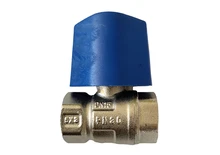
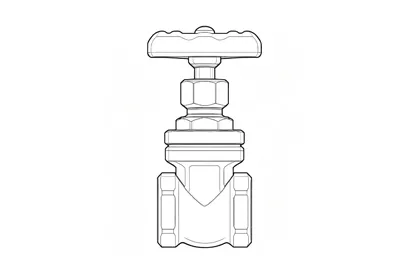
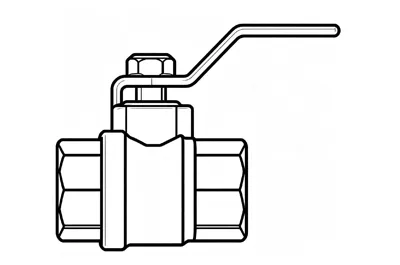
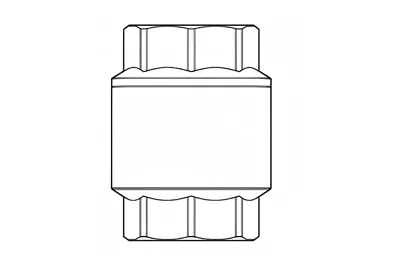
The right brass ball valve for a water system should be selected according to flow requirements, connection standard, operating conditions, and control requirements. Full-port designs are useful where minimizing flow restriction is important, while threaded configurations simplify connection to compatible pipework. A brass lockable ball valve becomes valuable where unauthorized operation or accidental shutoff must be prevented.
For contractors, distributors, and OEM buyers, comparing these options at the specification stage can help avoid installation problems and unnecessary pressure loss while improving long-term valve reliability.
Why Are Brass Ball Valves Used in Water Systems?
Brass ball valves for water are widely used for isolation because their quarter-turn mechanism allows the pipeline to be opened or shut quickly. Compared with multi-turn valves, a ball valve can normally reach the fully open or closed position with a simple 90-degree handle rotation.
The internal ball also provides a relatively direct flow path when the valve is fully open. This makes ball valves practical for water distribution lines, equipment connections, building services, and other applications where reliable shutoff is required.
The important consideration is that not every brass ball valve has the same internal passage, connection configuration, sealing materials, or operating mechanism. These details can have a measurable effect on system performance.

What Is a Full-Port Brass Ball Valve?
A full-port ball valve has an internal opening through the ball that is approximately aligned with the nominal pipe bore. When fully open, the flow path is therefore less restricted than in a reduced-port design.
This configuration can be advantageous in water systems where pressure loss needs to be minimized or where the pipeline may require cleaning or inspection equipment to pass through the valve.
A reduced-port valve can still be appropriate where compact dimensions, cost, or specific flow-control requirements are more important. The choice should therefore be based on the hydraulic requirements of the actual pipeline rather than assuming that full port is necessary for every installation.
For high-flow water applications, comparing the valve's internal bore and flow characteristics can be more useful than selecting a product solely by its nominal connection size.
Which Thread Type Should Be Used for a Brass Ball Valve?
The thread type must match the pipework and installation standard.
Common configurations include NPT and BSP-family threads, but these should not be treated as interchangeable. Thread profile, pitch, sealing method, and dimensional standards can differ even when the nominal size appears identical.
Before ordering a brass ball valve, buyers should confirm the required thread standard on both sides of the valve, especially for international projects where piping standards may vary between markets.
For distributors and OEM customers, specifying the exact connection standard in the purchase documentation can reduce installation errors and compatibility issues.
Are Threaded Brass Ball Valves Suitable for Water Applications?
Yes, threaded designs are commonly used in water systems when the connection standard and valve specifications are appropriate for the application.
Threaded valves are particularly practical for smaller-diameter pipelines and installations where straightforward assembly and future replacement are important. However, proper thread engagement and sealing are essential to prevent leakage.
The sealing method should also be compatible with the pipe material, water conditions, and installation requirements. Excessive tightening should be avoided because it can damage threads or place unnecessary stress on the valve body.
When Should You Choose a Brass Lockable Ball Valve?
A brass lockable ball valve is useful when the valve's operating position needs to be controlled or protected against unauthorized changes.
The locking mechanism can help prevent accidental opening or closing during maintenance, equipment operation, or controlled-access applications. It can also be useful where a valve must remain in a defined position after commissioning.
This feature is particularly relevant to commercial buildings, utility installations, industrial water systems, and equipment rooms where multiple personnel may have access to the pipeline.
The locking mechanism should be evaluated as part of the complete valve assembly. Buyers should confirm whether the handle design, locking method, and available clearances are suitable for the installation environment.
What Ball Valve Accessories Are Useful for Water Systems?
The required ball valve accessories depend on how the valve will be operated, installed, and maintained.
Lockable handles can provide additional operating control, while handle extensions may improve access in confined installations. Insulation or protective components may also be relevant in specific environmental conditions.
For automated systems, actuators and related mounting components may be required instead of a conventional manual handle. The compatibility between the valve stem, actuator, and mounting arrangement should be verified before procurement.
Accessories should not be selected independently from the valve. Correct dimensional and mechanical compatibility is necessary to ensure reliable operation.
How Do You Identify a High Quality Ball Valve?
A high quality ball valve should demonstrate consistency in materials, machining, assembly, sealing, and pressure performance.
For water applications, buyers should pay particular attention to the brass body and critical internal components, including the ball, stem, seats, and seals. Smooth machining and accurate component fit can affect both operating torque and shutoff reliability.
Production testing is equally important. Pressure testing, leakage testing, dimensional inspection, and finished-product checks provide evidence that the valve can meet its specified performance.
For bulk procurement, consistency between batches matters as much as the performance of an individual sample. A supplier should therefore be able to explain its quality-control process and provide appropriate technical documentation.
Does Full Port Improve Water Flow?
A full-port design can reduce the restriction created by the valve when it is fully open, which may help minimize pressure loss compared with a smaller internal passage.
The actual effect depends on the entire pipeline system, including pipe diameter, flow rate, valve size, fittings, and other sources of pressure loss. Full port should therefore be considered as part of the hydraulic design rather than treated as an automatic indicator of better performance.
How Can You Choose the Right Brass Ball Valve for a Water System?
Start with the operating requirements rather than the product name.
Determine the pipe size and connection standard first. Then evaluate the required flow rate, working pressure, temperature, water quality, installation environment, and frequency of operation.
If pressure loss is a concern, compare full-port and reduced-port configurations. If the valve position needs to be controlled, consider a brass lockable ball valve. Where maintenance or automation is involved, review the available ball valve accessories and their compatibility with the selected valve.
For commercial or industrial procurement, technical documentation, pressure-testing records, material specifications, and production consistency should also be considered when comparing suppliers.
Conclusion
Selecting brass ball valves for water systems requires more than matching the valve size to the pipe. Full-port construction can help reduce flow restriction, while the correct thread type ensures mechanical compatibility with the pipeline. A brass lockable ball valve adds another layer of control where accidental or unauthorized operation is a concern.
For demanding water applications, buyers should evaluate the complete valve construction, sealing materials, pressure performance, accessories, and manufacturing consistency. These factors provide a more reliable basis for identifying a high quality ball valve than appearance or price alone.
FAQs
Are brass ball valves suitable for water?
Yes, when the valve materials, pressure rating, sealing components, and applicable water-service requirements match the application.
What is the advantage of a full-port ball valve?
Its larger internal passage can reduce flow restriction and pressure loss when the valve is fully open.
What is a brass lockable ball valve used for?
It helps keep the valve in a controlled position and can prevent accidental or unauthorized operation.
Are NPT and BSP threads interchangeable?
No. They are different thread standards and should be matched correctly to the connected pipework.
What makes a ball valve high quality?
Consistent materials, precise machining, reliable sealing, appropriate pressure testing, and controlled manufacturing processes are key indicators.
Other Brass Valves from JKL Brass Valve