
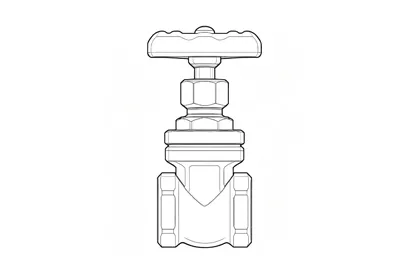
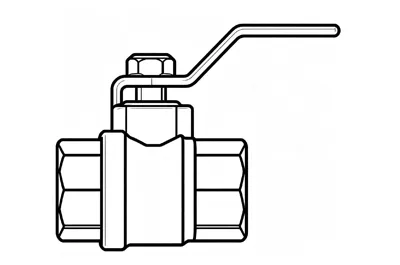
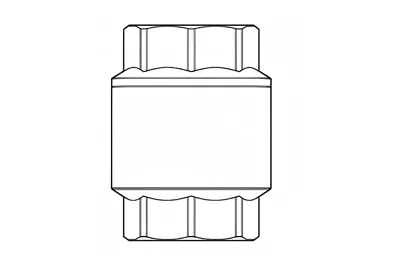
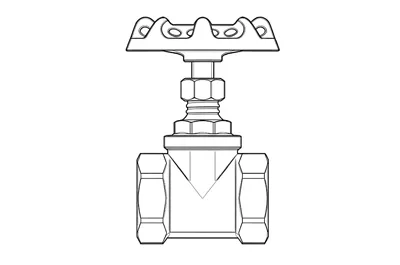
A brass gate valve can provide reliable isolation in water pipelines when its pressure rating, connection standard, sealing design, and installation method are properly matched to the system. Its service life, however, depends on more than the brass body itself. Thread quality, gate alignment, seat material, operating frequency, water conditions, and installation practices all influence long-term performance.
For a gate valve for water line applications, three areas deserve particular attention: correct installation, reliable sealing, and protection of the internal mechanism during service.
How Should a Brass Gate Valve Be Installed on a Water Line?
Correct installation starts with verifying the valve specification against the pipeline. The nominal size, connection standard, pressure rating, and flow requirements should be confirmed before the valve is installed.
The pipe should be properly aligned so that excessive mechanical stress is not transferred to the valve body. For threaded connections, the threads should be clean and undamaged, with an appropriate sealing material applied without excessive force. Over-tightening can deform the connection or place unnecessary stress on the valve body.
The valve should also be installed in a position that allows the handwheel to be operated and maintained safely. If the pipeline requires regular isolation, accessibility becomes particularly important.
Before commissioning, the pipeline should be flushed where appropriate to remove machining debris, scale, or other contaminants that could interfere with the gate or sealing surfaces.
What Causes a Gate Valve to Leak?
Leakage can originate from several points, and identifying the location is important before replacing the valve.
If water passes through the valve when it is fully closed, the problem may involve the gate, seat, sealing surfaces, or foreign material trapped inside the valve. Inadequate closing can also prevent the gate from achieving proper contact with the seat.
External leakage around the stem or connection is a different issue. Stem-seal wear, damaged threads, poor installation, or excessive operating force may contribute to leakage.
For this reason, valve selection should consider the complete sealing structure rather than simply the material of the valve body.
Why Is Sealing Material Important in a Water Gate Valve?
The sealing components determine how effectively the valve isolates the pipeline and how well it maintains that performance over time.
A soft sealing gate valve uses an elastomeric sealing element to create tight contact between the gate and the valve body or seat area. This design can provide effective shutoff in many water-service applications because the softer sealing surface can accommodate minor surface irregularities.
However, soft sealing materials must be compatible with the water temperature, pressure, chemical environment, and expected operating conditions. Material selection should therefore be based on the actual application rather than assuming that one seal material is suitable for every water system.
The quality and consistency of the sealing surface are also critical. Poor machining, uneven assembly, or contamination can compromise sealing performance even when the selected material is appropriate.
Is a Soft Sealing Gate Valve Suitable for Water Lines?
In many water distribution and utility applications, yes. A soft sealing gate valve is commonly selected when dependable shutoff and low leakage are priorities.
Its suitability still depends on operating conditions. Buyers should verify the working pressure, temperature range, water quality, sealing material, and applicable standards before selecting the valve.
Soft-seated designs can be particularly useful when the pipeline requires tight isolation rather than flow throttling. A gate valve should generally be operated fully open or fully closed instead of being used continuously in a partially open position.
How Can You Extend the Service Life of a Brass Gate Valve?
Service life is strongly influenced by how the valve is operated.
Repeatedly forcing a handwheel beyond its normal stopping point can damage the stem, gate, or sealing components. Similarly, using a gate valve for continuous throttling can expose the internal sealing surfaces to conditions for which the valve was not designed.
Water quality also matters. Sand, scale, suspended particles, and other contaminants can interfere with the gate and sealing surfaces. Keeping the pipeline clean and flushing it appropriately can reduce this risk.
For valves that remain unused for long periods, periodic inspection and controlled operation can help identify stiffness, corrosion, or sealing problems before they become system failures.
What Pressure Rating Should a Gate Valve for Water Line Have?
The valve's pressure rating should be selected according to the maximum expected operating conditions of the pipeline, including potential pressure fluctuations and surge.
Nominal pipe size alone does not determine whether a valve is suitable. A properly selected gate valve for water line applications should have a pressure rating compatible with the system's working pressure and temperature.
Where pumps or rapid valve operation may generate pressure surges, the pipeline design should account for these transient conditions rather than relying only on normal operating pressure.

How Does Manufacturing Quality Affect Gate Valve Service Life?
Manufacturing precision has a direct effect on sealing reliability and operating performance.
A qualified gate valve factory should maintain control over critical processes such as brass-body machining, thread production, gate and stem assembly, sealing-component installation, pressure testing, and finished-valve inspection.
Dimensional consistency is especially important for valves supplied in volume. Even small variations in threads, sealing surfaces, or internal components can affect installation and shutoff performance across different production batches.
For OEM and wholesale buyers, evaluating the factory's production capability and quality-control procedures can therefore be more meaningful than judging a valve solely by its appearance.
What Should You Ask a Gate Valve Supplier Before Ordering?
A professional gate valve supplier should be able to provide clear technical information before an order is confirmed.
Important details include valve size, pressure rating, connection standard, body and internal-component materials, sealing configuration, applicable certifications, testing procedures, packaging, and available customization.
For large-volume projects, buyers should also clarify production lead times, batch consistency, inspection procedures, OEM requirements, and after-sales technical support.
This information helps determine whether the supplier can provide a valve that is suitable not only for the initial installation but also for the expected operating conditions throughout its service life.
When Should a Brass Gate Valve Be Replaced?
Replacement is generally necessary when the valve can no longer provide reliable isolation, develops persistent external leakage, suffers significant internal damage, or becomes excessively difficult to operate.
A valve that requires abnormal force to open or close should not simply be forced into operation. The cause may be contamination, internal damage, stem problems, or excessive system stress.
For critical water lines, planned inspection can help identify deterioration before a valve failure affects the wider system.
Conclusion
The performance of a brass gate valve in a water pipeline depends on the interaction between valve design, sealing materials, manufacturing quality, installation, and operating conditions. Proper alignment and connection practices reduce installation-related problems, while an appropriate soft sealing gate valve design can provide reliable shutoff when its sealing material is compatible with the application.
For distributors, contractors, and engineering buyers, working with a capable gate valve factory or experienced gate valve supplier provides an additional layer of quality control. Technical specifications, pressure testing, material consistency, and production standards should all be considered when evaluating valves for long-term water-line service.
FAQs
Can a brass gate valve be used for potable water?
Yes, provided the complete valve meets the applicable potable-water material and certification requirements.
Should a gate valve be fully open or closed?
Generally, yes. Gate valves are primarily designed for isolation rather than continuous flow throttling.
Why is my gate valve difficult to turn?
Possible causes include contamination, internal damage, stem problems, corrosion, or excessive system pressure.
How often should a water gate valve be inspected?
The appropriate interval depends on system criticality, operating conditions, and local maintenance requirements. Critical systems generally require more frequent inspection.
Does a soft sealing gate valve prevent leakage?
It can provide tight shutoff when properly designed, installed, and maintained, but performance depends on sealing material, manufacturing quality, and operating conditions.
Other Brass Valves from JKL Brass Valve