Every few years, the manufacturing industry discusses the same topic: what products will become mainstream in the future?
What technology will become a trend? Which companies will survive? But what is truly worth thinking about is not what will succeed in the future, but what will disappear first.
Because every industrial upgrade means the birth of a batch of products, it also means another batch of products exits the historical stage.
Twenty years ago, many companies believed that manual control was sufficient and there was no need to develop automatic control; more than ten years ago, many people thought that ordinary mechanical valves still had a long-term advantage, and intelligent control was only needed for a few high-end projects; until today, as more and more large buildings, industrial parks, and data centers begin to adopt digital management systems, people have realized that industry changes do not happen suddenly but reach a turning point after years of accumulation.
In the next decade, what the valve industry truly needs to pay attention to is not which company will be eliminated, but which type of product will gradually lose its competitiveness. It is worth noting that the "elimination" mentioned here does not mean that the market will disappear completely, but that it will gradually shift from mainstream products to low-end products, specific scenario products, or be replaced on a large scale by new solutions.
What is truly dangerous is not whether the product can still be sold, but that profits are getting lower and lower, the market is getting smaller and smaller, and eventually loses the value of continuous investment.
I. Traditional Mechanical Valves Without Adjustment Capability Will Have a Shrinking Market Space
In the past few decades, the development logic of the valve industry was very simple: solve fluid transportation, achieve opening and closing, and ensure reliable sealing. These capabilities determined whether a valve was excellent, but in the next ten years, being able to "open" and "close" alone is far from enough.
As building energy-saving requirements continue to increase, HVAC systems are increasingly emphasizing on-demand energy supply, precise control, and energy management. When customers buy valves, they no longer only care about whether it can be used, but whether it can save energy, improve system efficiency, and reduce operation and maintenance costs.
This means that those products that can only complete basic opening and closing functions and lack adjustment capabilities will find their market demand increasingly restricted.
For example, in many new commercial buildings, high-end residences, hospitals, rail transit, and data center projects, traditional manual balancing methods have gradually been replaced by dynamic balance control. In the future, this trend will further expand.
Traditional mechanical valves will not disappear immediately, but they are increasingly likely to be concentrated in price-sensitive markets rather than high-value-added markets.
II. Products Relying on Manual Debugging Will Become Less Competitive
In the past, after an HVAC project was delivered, it was normal for site engineers to spend days or even weeks completing system debugging. But in the future, large-scale manual debugging will become increasingly difficult. The reason is simple: labor costs are getting higher, project cycles are becoming shorter, and there are fewer and fewer professional debugging personnel.
Customers want products to be able to run quickly after installation, rather than relying on on-site experience for a long time. Therefore, those products that must rely on repeated manual adjustments to achieve design conditions will find it increasingly difficult to meet market demand.
In the future, customers will want to see products with self-adaptive capabilities, automatic balancing capabilities, automatic parameter recognition capabilities, and the ability to quickly complete configuration through software.
What will truly be eliminated is not a specific type of valve, but a work model that relies heavily on manual experience.
III. Valves That Cannot Connect with Intelligent Systems Will Gradually Be Marginalized
Ten years ago, many people thought that actuators were just accessories for valves.
Today, more and more companies have realized that actuators are becoming an important part of the product's overall value. One of the biggest changes in the valve industry over the next decade will be the shift from single product competition to system competition.
Customers are no longer just buying a valve, but a complete control node. It needs to be able to connect to building automation systems, support remote monitoring, feedback operational status, record historical data, and enable predictive maintenance. If a valve cannot provide these capabilities, no matter how excellent its mechanical performance is, it will be difficult to enter more and more high-end projects.
In the future, the value of products that can connect to systems will continue to rise, while products that cannot connect to digital systems will be increasingly confined to traditional markets.
IV. Non-Standardized Products Will Find It Increasingly Difficult to Survive
In the past, many companies relied on a large number of non-standard products to obtain orders. Whatever the customer requested, they designed. This model may seem to meet customer needs in the short term, but in the long term, it places enormous cost pressures. Product models keep increasing, parts become more complex, inventory continues to grow, and production efficiency keeps declining.
As industry competition becomes more intense in the future, platformization, modularization, and standardization will become important directions for R&D. The same platform supports multiple specifications, the same set of parts covers more models, and the same actuator adapts to different products. This not only reduces R&D costs but also improves delivery efficiency.
Therefore, those platforms that rely heavily on non-standard designs and cannot achieve modularization will increasingly lack competitive advantages.
V. High Energy Consumption Products Will First Lose the Market
The global manufacturing industry is undergoing a new change. In the past, customers focused on purchase costs. In the future, customers will increasingly focus on lifecycle costs.
In ten years of using a device, the real costliest expense is often not the purchase cost, but the operating and maintenance costs. Therefore, products with high pressure loss, high energy consumption, and low efficiency will find it increasingly difficult to gain the recognition of high-end customers.
Especially in the HVAC industry, more and more projects are beginning to adopt lifecycle cost assessments. A valve that can save energy, even if its purchase price is higher, may have a greater market advantage.
In the future, high efficiency will gradually replace low price as the new focus of competition.
VI. Products Without Data Value Will Have Decreasing Profits
One of the biggest changes in the future of manufacturing is that products will start generating data. In the past, a valve completed flow control, but in the future, a valve may also undertake data collection, operational analysis, fault warning, and other functions. Products will begin to become data entry points, and companies can not only sell products but also provide operational analysis, energy-saving evaluation, remote maintenance, and other value-added services.
And those products that can only provide mechanical functions and cannot provide data value will find their profit margins increasingly squeezed. In the future, the gap between high-value products and ordinary products may not lie in materials, but in data capabilities.
VII. Homogeneous Products Lacking Brand and Technical Accumulation Will Enter Price Wars First
In recent years, the most obvious change in the valve industry is that products are becoming more and more similar: similar appearance, similar structure, similar parameters, and similar supply chains.
If a company's only competitive advantage is price, then the pressure will only increase in the future because there will always be someone with a lower price than you.
Companies that can truly survive in the long term must have their own characteristics. It could be control accuracy, reliability, lifespan, service system, or brand influence.
In the next decade, the products that will be eliminated the fastest are not a specific structure, but products without differentiation capabilities.
VIII. The Future Will Belong to "System Products"
The future direction of the valve industry is becoming increasingly clear. Products will no longer be just independent components but an important part of the entire fluid control system.
Mechanical design, motors, electronic control, software algorithms, communication protocols, cloud platforms, and energy management will become more and more closely integrated.
This means that a company's true competition in the future is not just its valve design capabilities but its overall solution capabilities.
Companies that can provide complete control systems will have increasingly obvious competitive advantages. And companies that remain at the stage of single mechanical products will face increasing challenges.
Conclusion
Many people ask, what products in the valve industry will be the first to be eliminated in the next decade?
The answer is not actually a specific model or structure.
<p style="-webkit-tap-highlight-color: rgba(0, 0, 0, 0); margin-top: 0px; margin-bottom: 24px; padding: 0px; outline: 0px; max-width: 100%; clear: both; min-height: 1em; color: rgba(0, 0, 0, 0.9); font-family: "PingFang SC NEW", system-ui, -apple-system, BlinkMacSystemFont, "Helvetica Neue", "
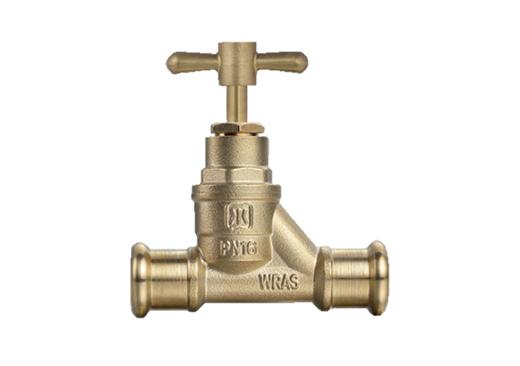
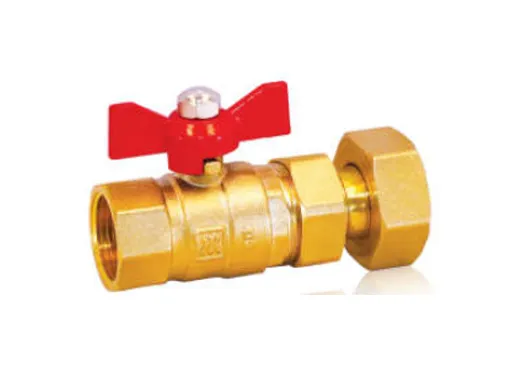
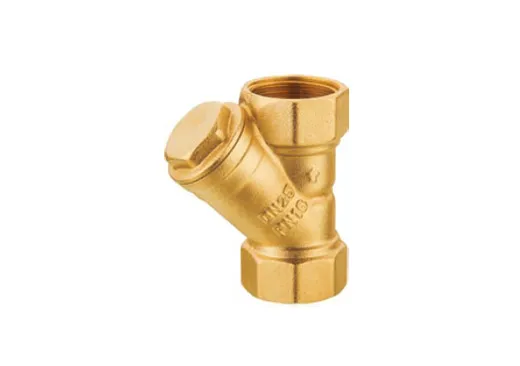
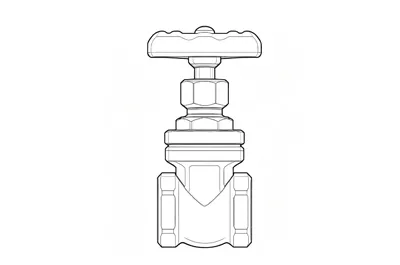
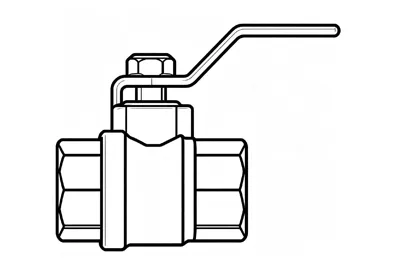
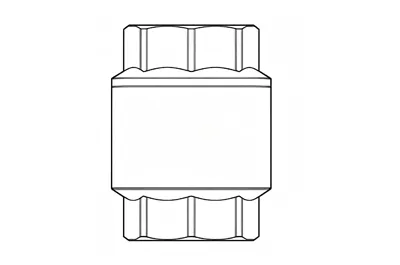
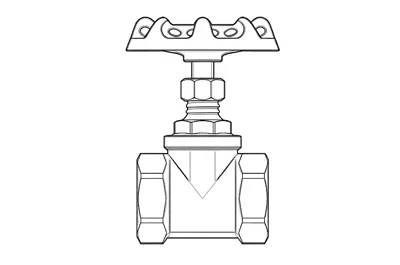
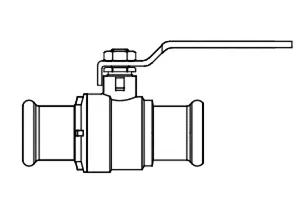
Other Brass Valves from JKL Brass Valve