HVAC design seems simple, but it is actually an essential auxiliary for many industries. Without the intricate details of HVAC, even the most magnificent buildings are just soulless blocks of reinforced concrete. Let's take a look at 12 essential knowledge points about HVAC!
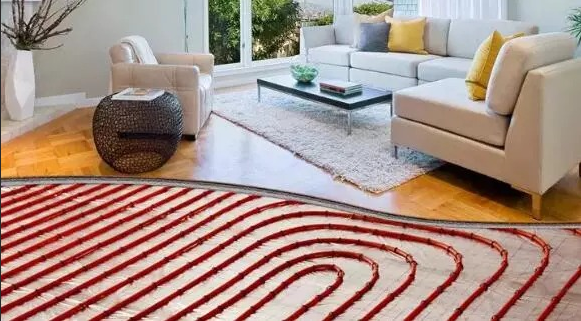
1.What is the energy efficiency ratio of electric floor heating?
The efficiency of converting electricity directly to heat should be greater than 90%.
2.Is the heat load index based on the building area or the heating area?
Building area.
3.What is the estimated load per square meter for floor heating and radiators?
When designing a single unit versus the whole system, the heat source selection differs. For single units, the heat load per room can be estimated at 60~70w/sqm (cold regions), and 80~100w/sqm for very cold regions. For the entire project, estimate based on building area: 40~50w/sqm for cold regions and 60~80w/sqm for very cold regions.
4.For a public restroom on the first floor,
what system form is suitable for radiator heating?
Double-pipe top supply and return; bottom supply and return require heating trenches, which can be slightly cumbersome.
5.Volumetric heat exchanger vs. ordinary plate exchanger
What are the differences and where are they used?
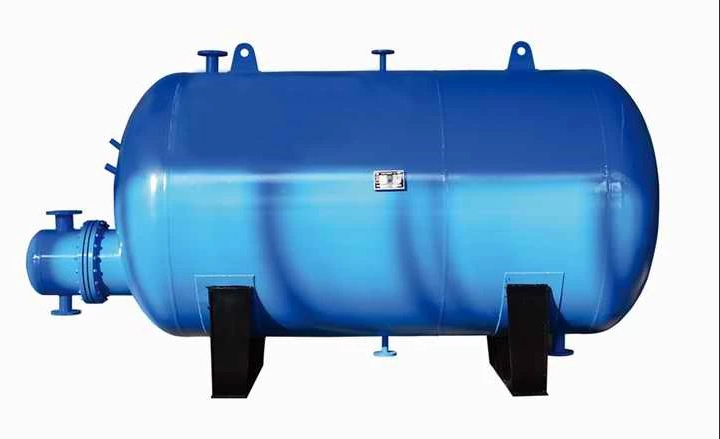
Volumetric heat exchangers are storage heat exchangers mainly used for domestic hot water, allowing for the storage of a portion of hot water to adjust volume. Plate heat exchangers are instant-heating, with fast heating and high efficiency but do not store heat, suitable for heating systems.
6. For fresh air or exhaust systems using shared manifolds,
is it necessary to add check valves on each branch pipe?
Yes, it is definitely necessary.
7.Is it necessary to set up a fan room for the positive pressure fan on the roof?
Yes, a fan room is needed.
8.For a factory using streamlined roof natural ventilators,
how to calculate its ventilation volume?
The purpose of ventilation usually includes cooling, removing toxic or harmful gases, and dehumidification. It is unclear which type your factory falls into, but the calculation method is generally the same, using energy balance or material balance equations.
9.In civil air defense design, should diffusion chambers be set up at the supply and exhaust ports of material depots?
Diffusion chambers need to be set up because the principle of port setting in the architectural and HVAC profession is one protection and two seals. One protection refers to protection against shock waves, usually with protective airtight doors or suspension plate valves. Two seals refer to two anti-toxic agent facilities, usually airtight doors or sealing valves on ventilation pipes. Protective airtight doors can protect against shock waves and toxic agents, while airtight doors can only protect against toxic agents.
10.In the 2014 edition of the fire protection code, regarding the requirement for smoke exhaust ducts to be equipped with insulation layers and a spacing of not less than 150mm, does it mean that either condition must be met, or both?
The code uses "and," so both must be satisfied.
11.For smoke extraction systems, air conditioning supply and exhaust systems, when estimating pressure loss, what is the specific friction resistance per unit length?
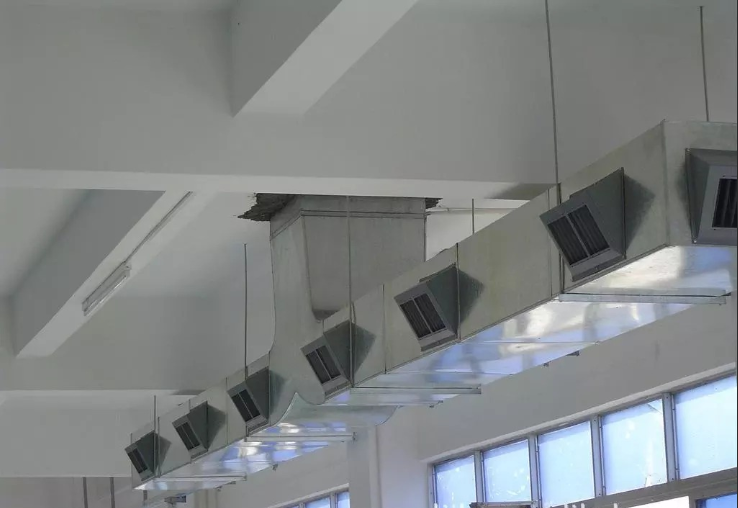
The specific friction resistance for smoke extraction is about 8Pa/m; for air conditioning, it is about 4~5Pa/m, which needs to be multiplied by 1.2. Generally, local resistance accounts for 20~30% of the total resistance.
12.For smoke exhaust ducts and air supply ducts (or others requiring fire resistance), if the fire resistance limit is greater than or equal to 1 hour, is the measure to use fireproof paint with aluminum silicate board, or are there other measures?
In addition to adding aluminum silicate board, external rock wool insulation is also a measure to improve fire resistance.
Other Brass Valves from JKL Brass Valve