Valves are indispensable control components in pipeline systems, performing multiple functions such as shut-off, regulation, and protection. This article provides an in-depth analysis of the internal structure and operating principles of nine of the most commonly used valves, enabling you to quickly grasp the core characteristics and appropriate application scenarios for each type of valve.
I. Ball Valve
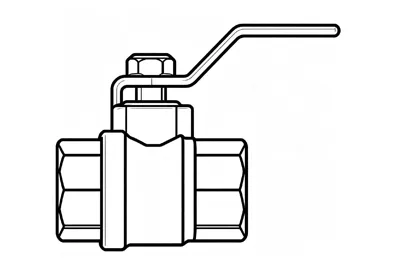
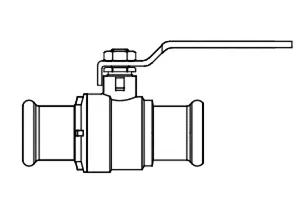
Key features: rapid actuation, minimal flow resistance, and excellent sealing performance. The core of a ball valve consists of a spherical valve disc with a through-hole. When the handle is rotated 90° to align the through-hole with the pipeline, the valve opens fully, allowing fluid to pass through with virtually no obstruction; when the ball is rotated so that the through-hole is perpendicular to the pipeline, the valve closes, completely blocking the flow of fluid. Due to its large, straight-through flow path, the fluid resistance of a ball valve in the fully open position is the lowest among all types of valves, making it ideal for applications involving high flow rates and the need for rapid opening and closing. The ball valve is sealed internally by an annular valve seat; during rotation, a certain amount of friction is generated between the valve seat and the ball – a factor that must be carefully considered in the design.
· Advantages: Fast switching, low flow resistance, reliable sealing, and compact design
· Disadvantages: poor adjustment accuracy and complex maintenance requirements when the valve seat wears out.
· Typical applications: oil and gas pipelines, chemical processing plants, urban water supply systems;
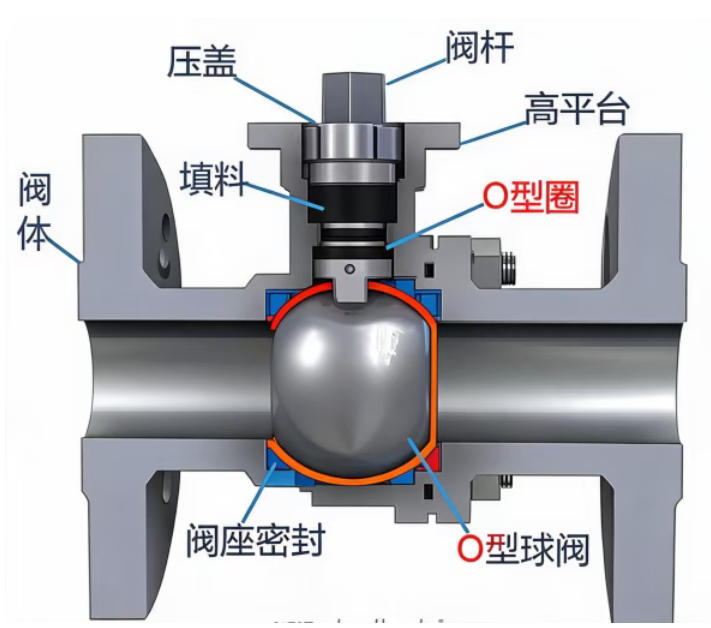
Figure 1: Ball Valve Structural Sectional View
II. Butterfly Valve
Key features: lightweight construction, compact size, and low cost. The core of a butterfly valve consists of a disc-shaped valve plate mounted on a central shaft within the pipeline. By rotating the handwheel or actuator, the valve plate can be turned 90° about its axis to achieve full open or full close positions. When fully open, the valve plate is parallel to the fluid flow direction, resulting in minimal resistance; when fully closed, the valve plate is perpendicular to the fluid flow direction, effectively blocking the flow path. The butterfly valve features a very simple structure, is lightweight and compact, making it particularly suitable for large-diameter pipelines. Although there is still some flow resistance when the valve is fully open (as the valve plate remains partially within the pipeline), its exceptional cost-effectiveness makes it widely used in applications such as water supply, HVAC, and fire protection systems.
· Advantages: compact design, lightweight, low cost, and fast opening/closing speed
· Disadvantage: The sealing performance is slightly inferior to that of ball valves; the permanent flow passage in the valve disc introduces a certain flow resistance.
· Typical applications: water treatment, HVAC systems, fire protection systems, large-diameter water distribution pipelines
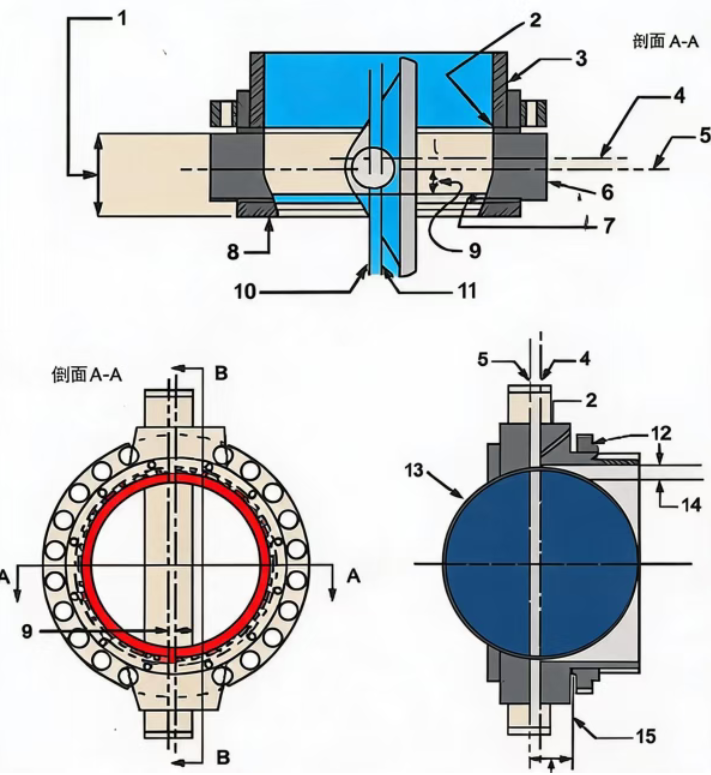
Figure 2: Butterfly valve structural sectional view
III. Gate Valve
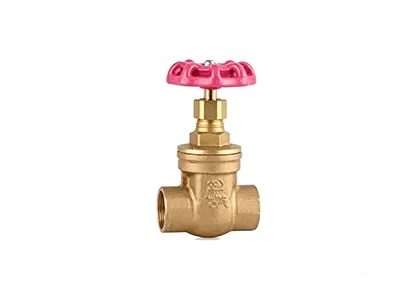
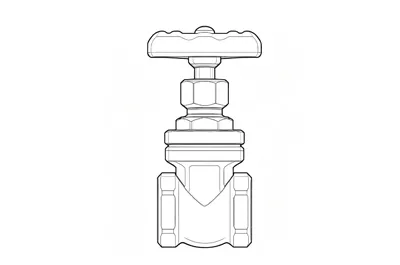
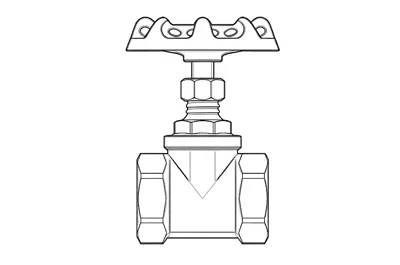
Key features: At full open position, the flow resistance is minimal and the sealing surfaces are less prone to wear; the gate valve is operated by a handwheel that drives the valve stem, causing the gate (valve core) to move vertically up or down. When fully open, the gate completely separates from the flow path, allowing fluid to flow straight through with virtually zero resistance; when closed, the gate descends gradually until it tightly engages with the valve seat, achieving a complete seal. Gate valves are particularly suitable for applications requiring full open or full closed operation but are not ideal for frequent flow rate adjustment. Due to the low friction between the gate and the valve seat during opening and closing operations, the sealing surfaces experience minimal wear, resulting in a long service life. Diaphragm-type gate valves utilize a flexible elastic diaphragm that effectively prevents corrosive media from contacting the metal components, thereby extending the valve's service life.
· Advantages: Nearly zero total flow resistance, excellent sealing performance, and unrestricted flow direction
· Disadvantages: slow opening and closing speed, relatively complex structure, and large size
· Typical applications: oil pipelines, main water supply mains, steam pipelines
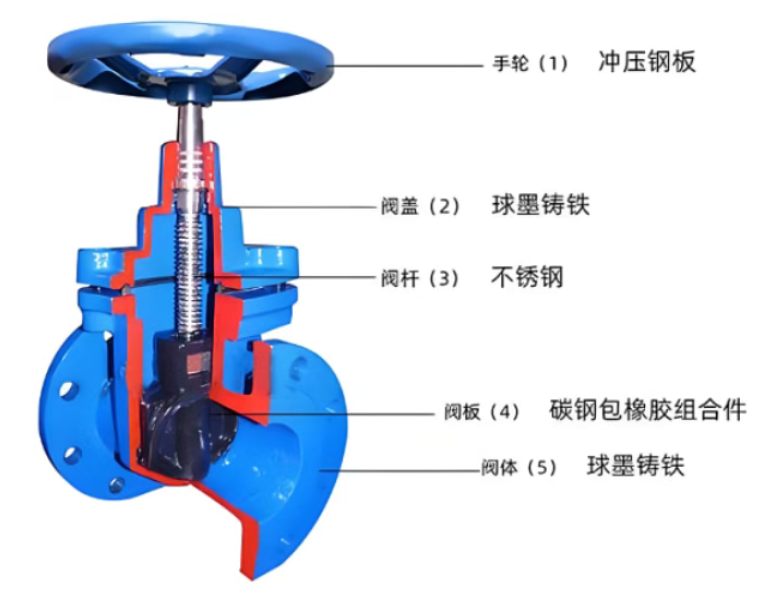
Figure 3: Gate Valve Structural Sectional View
IV. Globe Valve
Key features: High adjustment precision, reliable sealing, and precise flow control – the flow control valve is operated via a handwheel that drives the valve stem, causing the valve disc to move up and down along the central axis of the valve seat. When the valve disc is lifted, the flow path gradually opens, allowing fluid to flow around the disc from below to above; when the valve disc descends, the flow path area gradually decreases until the disc fully engages with the valve seat, achieving a tight seal. Unlike gate valves, globe valves are particularly well-suited for fine flow regulation. In industrial applications, globe valves typically adjust the flow area by raising or lowering the valve disc, thereby enabling precise flow control. Some automatic globe valves can also automatically adjust their opening based on system parameters such as pressure or temperature, facilitating intelligent flow management.
· Advantages: High adjustment precision, excellent sealing performance, simple structure, and easy maintenance
· Disadvantage: High flow resistance (requires the fluid to change direction); not suitable for large-diameter applications.
· Typical applications: steam systems, chemical process control, and small-scale pipeline flow rate regulation
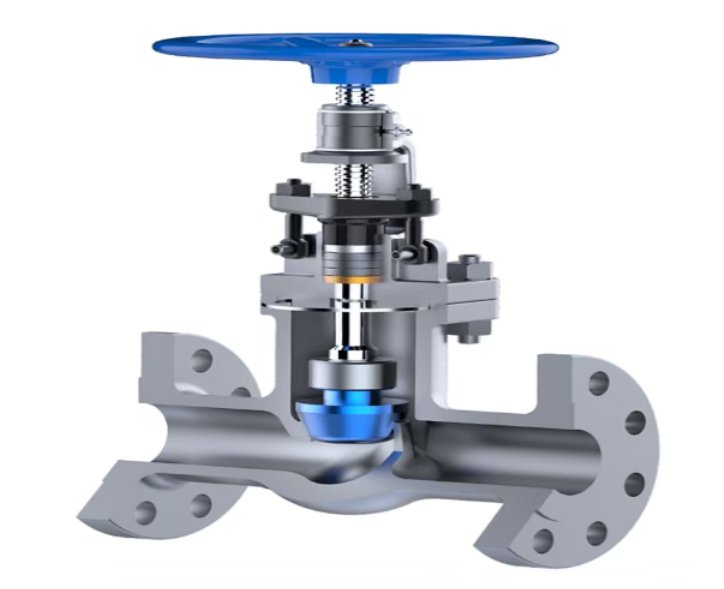
Figure 4: Shut-off valve structural sectional view
V. Control Valve
Key features: Automatic pressure/flow regulation, rapid response, and intelligent control – the regulating valve is an automatic control valve capable of adjusting the internal pipeline pressure or flow rate in real time based on system signals. When excessive outlet pressure is detected, the valve automatically reduces its opening to maintain the outlet pressure at the setpoint; when the pressure is too low, the valve opens wider to release additional flow and restore the pressure. A regulating valve typically consists of a valve body, an actuator (pneumatic/electrical/hydraulic), and a control system. It detects pressure changes via a pilot valve (guide valve), which drives the main valve to actuate, thereby establishing a closed-loop control system. In industrial automation systems, the regulating valve serves as the core actuating component for process control.
· Advantages: Automatic adjustment, high precision, remote control capability, and suitability for complex operating conditions
· Disadvantages: complex structure, high cost, and requirement for a配套 control system
· Typical applications: automated processes in the petrochemical, power and thermal energy, pharmaceutical, and food industries, among others.
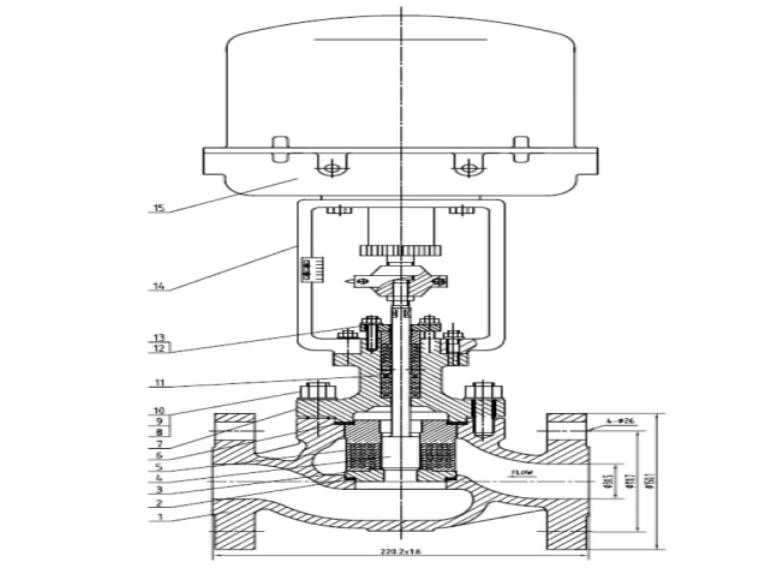
Figure 5: Control Valve Structural Sectional View
VI. Safety Valve
Core features: Automatic activation upon overpressure, protection of system safety – the safety valve serves as the "mandatory protective component" of the pressure system and represents the final line of defense for the entire system. Under normal operating pressure, the spring force keeps the valve disc tightly seated against the valve seat, keeping the valve closed. When the system pressure exceeds the preset threshold, the medium pressure overcomes the spring force, causing the valve disc to open; the overpressure fluid is then rapidly discharged until the pressure falls within the safe range, at which point the valve automatically returns to its closed position. Safety valves are typically divided into two components: the shut-off valve and the alarm valve. The shut-off valve acts as the first line of defense – it closes when pressure levels are normal; when pressure rises abnormally, the shut-off valve activates first and, if necessary, triggers the联动 of the alarm valve to ensure system safety. Once the pressure returns to normal, all valves automatically close again. Its normal operation does not rely on external power; it is a true "zero-tolerance" safety component.
· Advantages: Fully automatic protection, no external power required, and extremely high reliability
· Disadvantages: Large single discharge volume; requires re-verification after activation.
· Typical applications: boilers, pressure vessels, steam systems, chemical reaction vessels
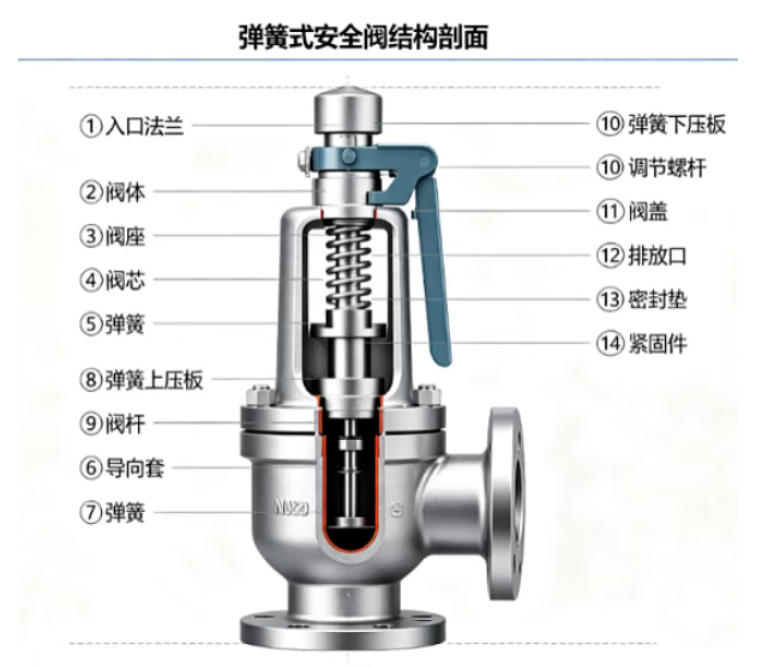
Figure 6: Safety valve structural sectional view
VII. Check Valve
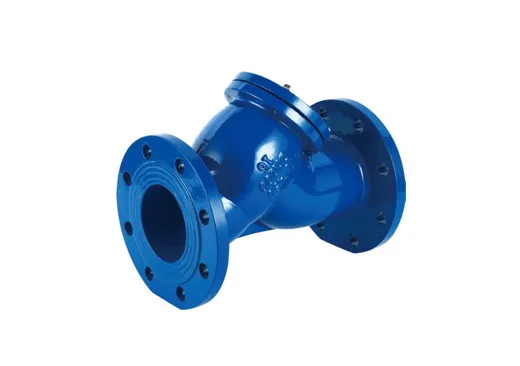
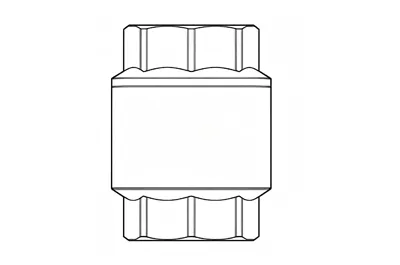
Core features: Unidirectional flow, automatic opening and closing, and prevention of fluid backflow – a check valve (also known as a non-return valve) is an automatic valve that allows fluid to flow in only one direction. When the forward fluid pressure is sufficient, the valve disc is pushed open, and the valve opens; when the fluid flow ceases or backflow occurs, the valve disc automatically closes under the influence of its own gravity or the backflow pressure, seating tightly against the valve seat to prevent reverse flow of the medium. Check valves are essential in applications such as pump outlets and compressor exhaust ends, as they effectively prevent equipment damage caused by fluid backflow after a shutdown. Common structural types include rising stem, swing-type, and butterfly check valves, each suitable for different application scenarios. In gas systems, check valves effectively prevent the reverse flow of high-pressure gas.
· Advantages: Fully automatic unidirectional control, no external operation required, simple structure
· Disadvantages: Water hammer effect may occur upon shutdown; sealing surfaces are susceptible to wear.
· Typical applications: pump outlet, compressor exhaust port, gas pipeline backflow prevention
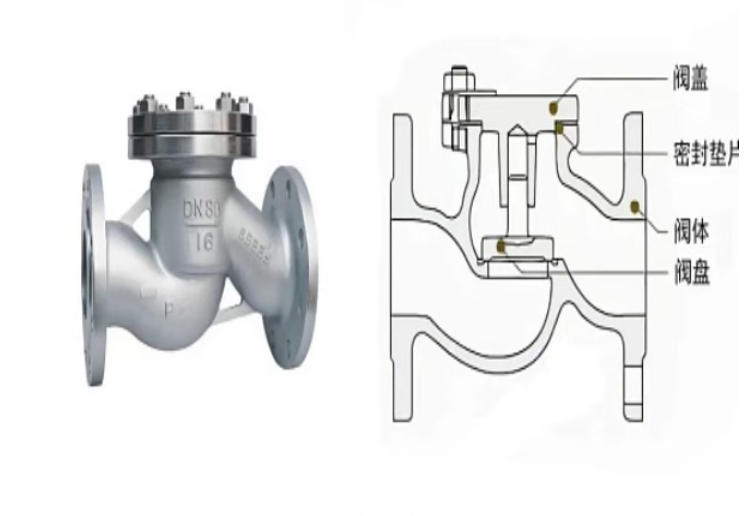
Figure 7: Check valve structural sectional view
8. Pressure Reducing Valve
Key features: Stable outlet pressure regulation, automatic adjustment, and protection of downstream equipment. The pressure reducing valve is designed to reduce high inlet pressure to the required stable outlet pressure. It detects changes in outlet pressure using internal sensing elements (diaphragm or piston): when the outlet pressure exceeds the set value, the valve closes to reduce the flow rate; when the outlet pressure decreases, the valve opens to increase the flow rate for compensation. The pressure reducing valve operates solely on the inherent pressure energy of the medium, requiring no external power source. It typically consists of two components: a main valve and a pilot valve; the pilot valve is responsible for sensing and setting the pressure, while the main valve performs the actual regulation function. In gas and water supply systems, the pressure reducing valve is a critical component for protecting downstream equipment.
· Advantages: Stable export pressure, automatic regulation, and no external power source required
· Disadvantages: The inlet pressure must be at least a certain differential higher than the outlet pressure; precision components are susceptible to clogging.
· Typical applications: gas transmission and distribution systems, water pressure reduction, steam pressure reduction, hydraulic systems
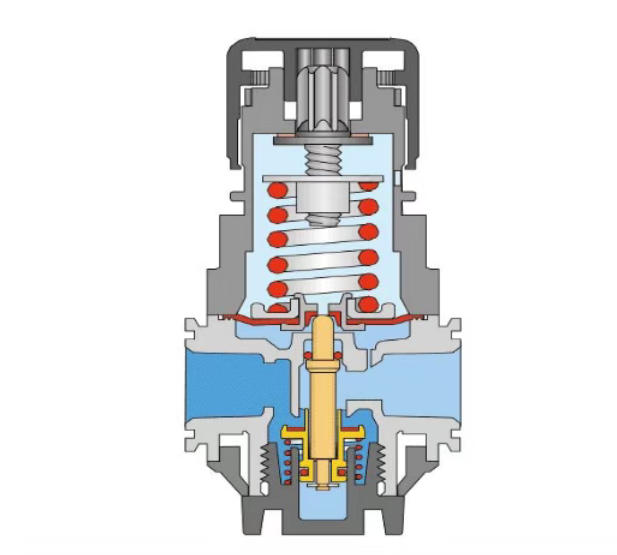
Figure 8: Pressure reducing valve structural sectional view
IX. Diaphragm Valve
Key features: Complete isolation between the medium and the driving components; corrosion resistance; excellent sealing performance. The diaphragm valve utilizes a flexible elastic diaphragm as its primary sealing element. When operated by a handwheel or actuator, the valve stem pushes the diaphragm downward, causing it to deform and tightly adhere to the bottom of the valve body (for the weir-type design), thereby blocking the flow path; when the valve stem is raised, the diaphragm returns to its original position, opening the flow path. The greatest advantage of the diaphragm valve is that the medium comes into contact solely with the diaphragm and the inner wall of the valve body – it does not come into contact with the metal valve stem or the driving mechanism at all – making it particularly suitable for conveying corrosive, toxic, or high-purity media. The multi-layer diaphragm design further enhances sealing reliability; even if a single layer is damaged, no immediate leakage occurs, providing the ultimate safeguard for the safe operation of pipeline systems.
· Advantages: Zero leakage for media, corrosion resistance, suitable for high-purity or toxic media
· Disadvantages: The diaphragm is a wear component that requires regular replacement; temperature and pressure limitations apply.
· Typical applications: acid–base chemical industries, semiconductor ultra-pure water production, pharmaceuticals, and food and beverage industries
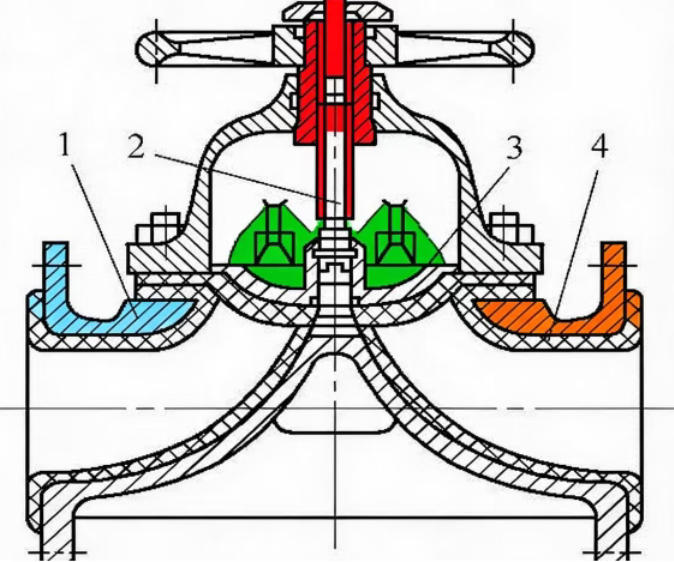
Figure 9: Cross-sectional view of the diaphragm valve structure
sum up
Each of the nine valve types has its own advantages; when selecting a valve, the following factors should be considered comprehensively:
· Media characteristics: For corrosive media, use diaphragm valves; for high-temperature and high-pressure applications, use gate valves or shut-off valves.
· Functional requirements: Rapid shut-off for selection ball valves/butterfly valves; precise adjustment for selection shut-off valves/control valves
· Safety considerations: An overpressure protection safety valve is mandatory; a check valve is mandatory for backflow prevention.
· Economic efficiency: For large-diameter applications, select butterfly valves; for small-diameter applications requiring high precision, select globe valves.
· Easy maintenance: Diaphragm valves require regular replacement of their diaphragms; ball valves and gate valves have a longer maintenance interval.
Other Brass Valves from JKL Brass Valve